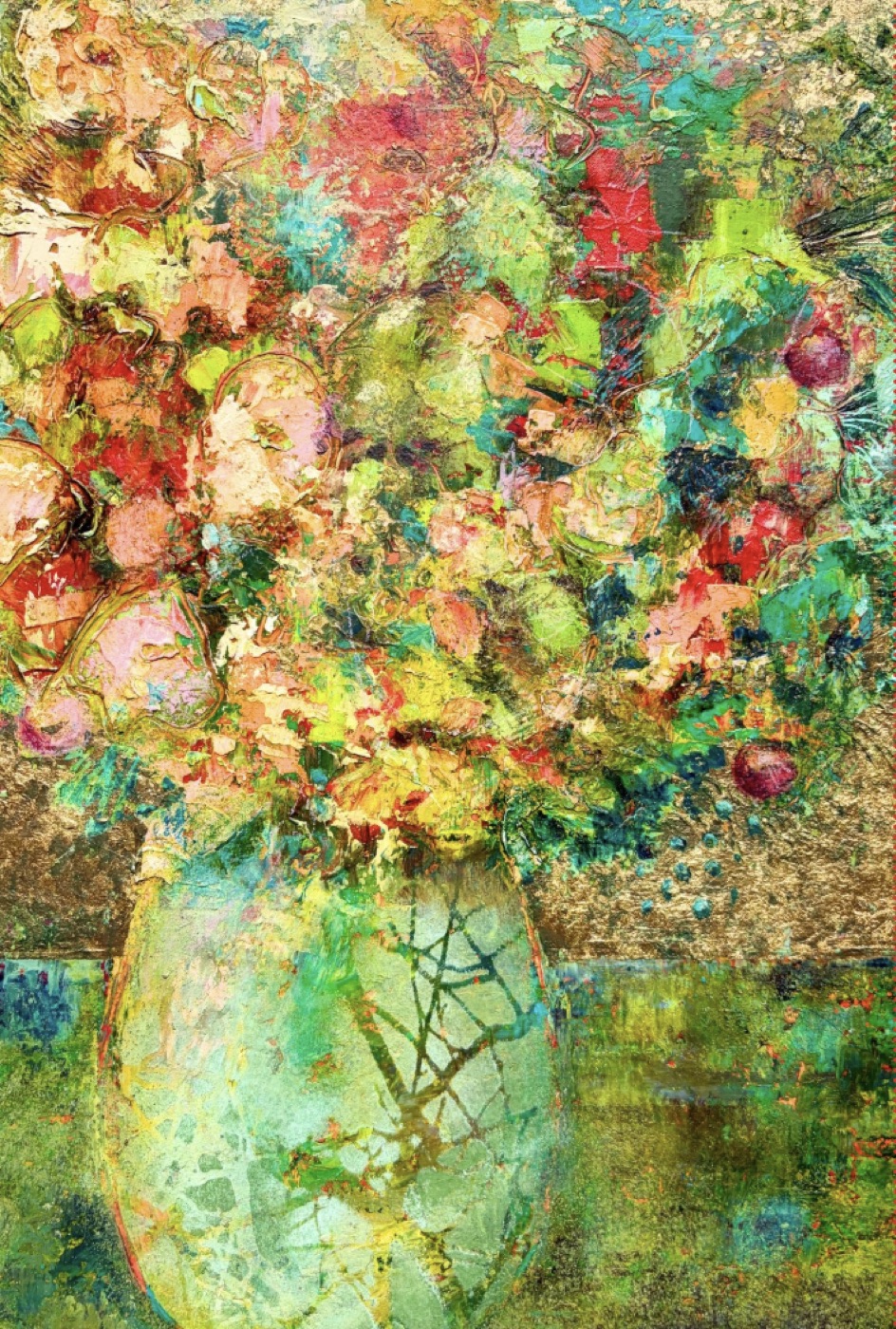
If you’ve been looking at textured paintings and wondering how they’re made, I’d love to show you. We’ll try the materials, make marks and paint our way from small abstracts to a landscape and flowers.
Abstracts · A landscape · FlowersSix modules + a bonusStart whenever you likeEnglish · French · Dutch · German
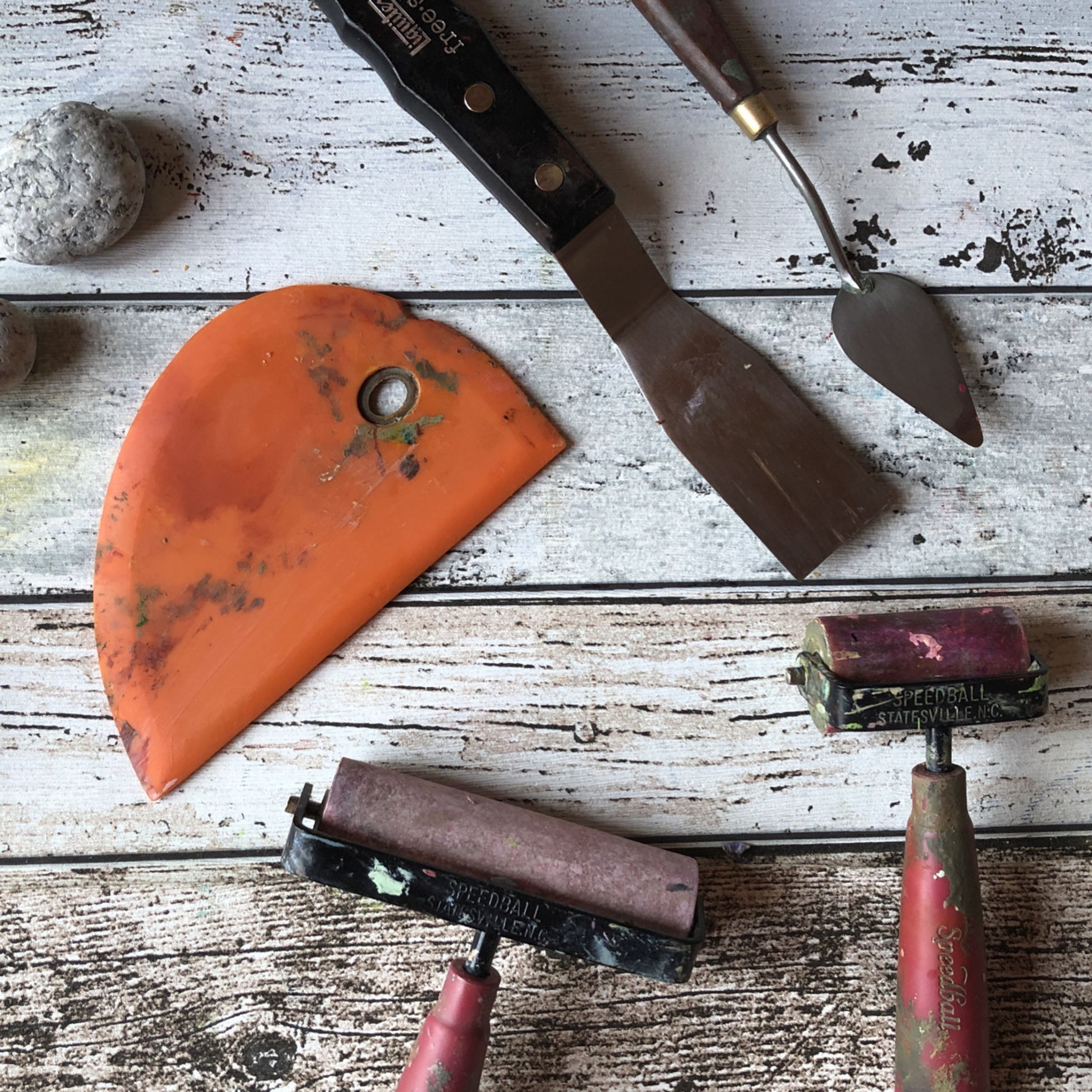
A few of the tools we’ll try togetherLet’s try this.
Get to know the paint
You can begin with a small painting.
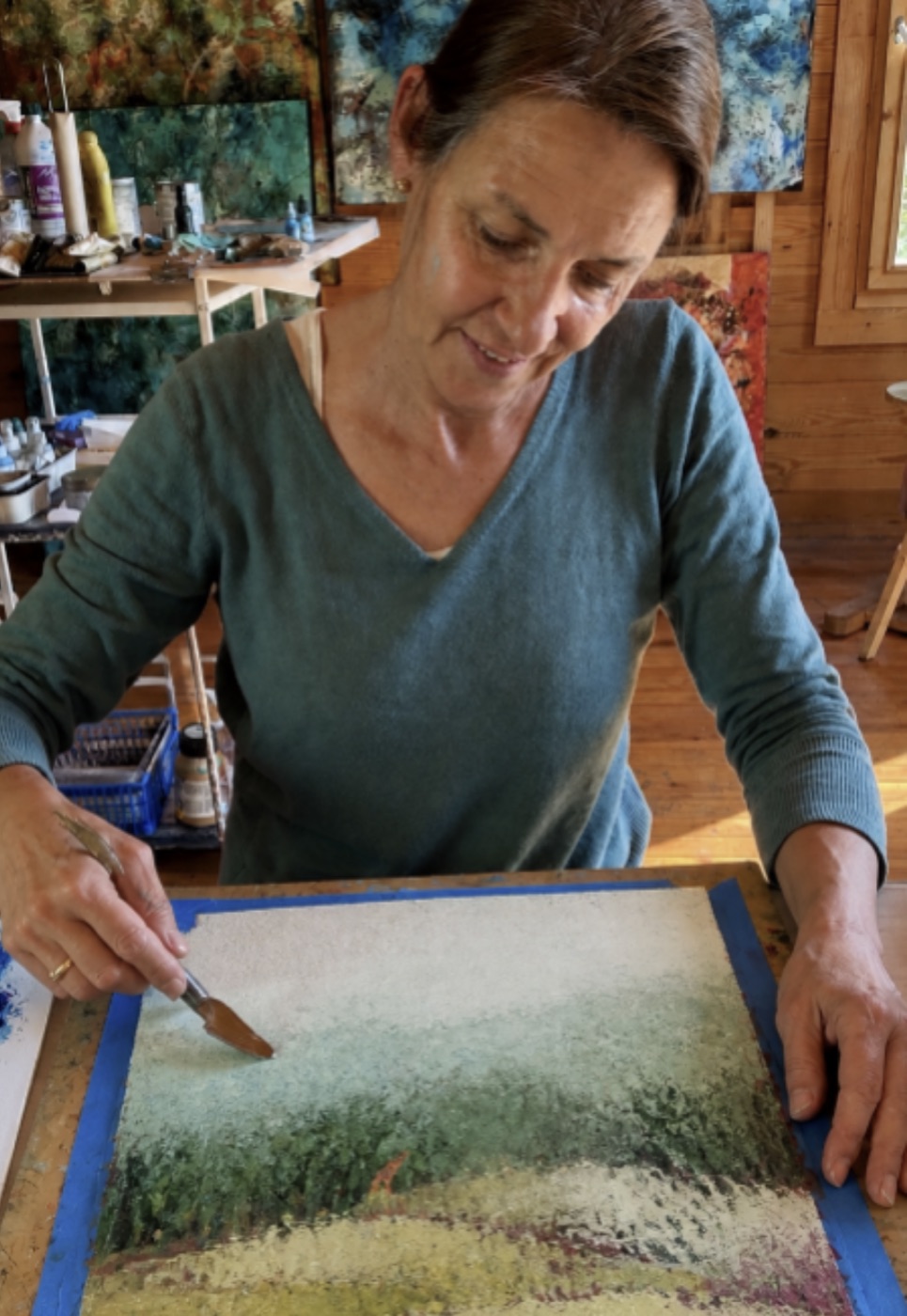
Before we think about a landscape or a vase of flowers, we’ll spend some time with the paint. Spread it with a scraper, try a different tool and see what happens when one colour goes over another.
I’ll explain what I’m doing as I work. You can pause the video and try it for yourself, without having to make a finished painting straight away.
And you don’t need every tool on my table. Start with the essentials in the supply list, use the colours you have and add things as you’d like to try them.
You’ll see how the same materials can take you in different directions. Follow along, then try the colours and marks that appeal to you.
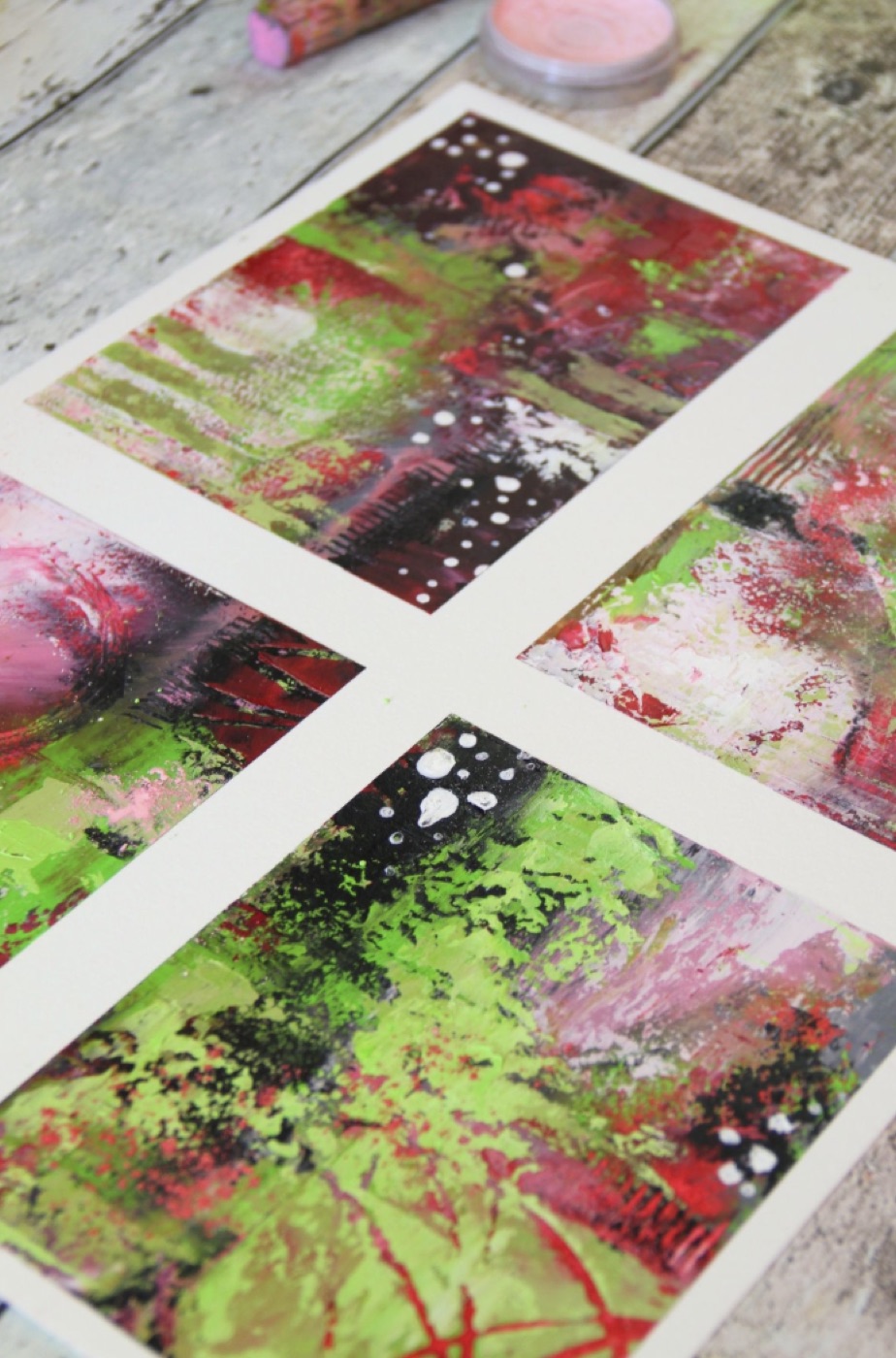
Mini Abstracts
Start small and try things out.
We begin with four mini abstracts and a small palette of colours. Try a mark, add a layer, turn the paper around. Working on a few small paintings gives you room to experiment without getting stuck on one painting.
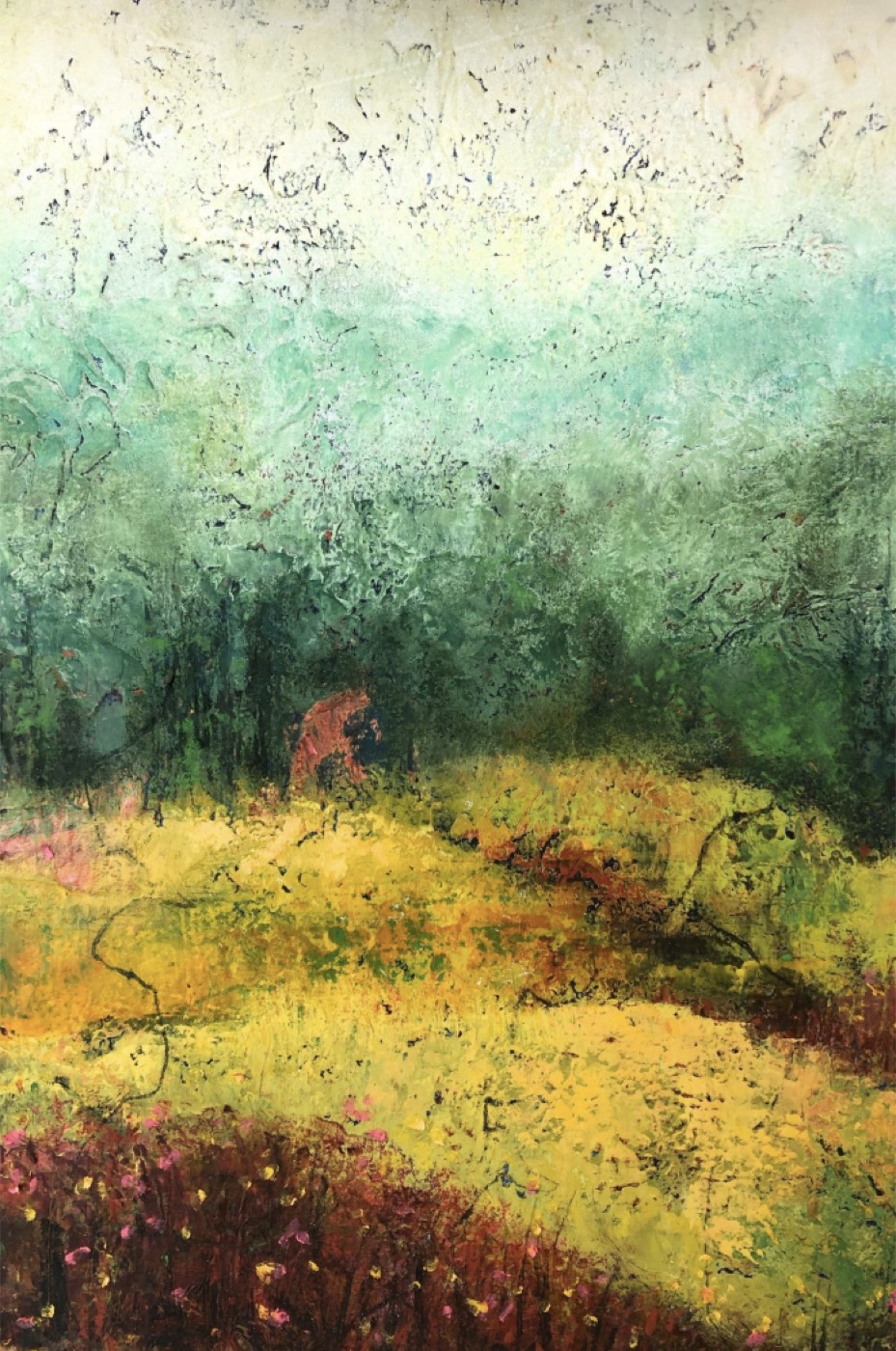
Lush Landscape
Find a landscape in the colours.
Bring those first experiments into a landscape. We’ll build depth and atmosphere with colour and texture, letting parts of the earlier layers stay visible. You can follow my painting and explore your own colours too.
Floral Flourish
Leave room for a few surprises.
Paint flowers with a lively, textured background. I’ll show you how I bring in collage, transparent colour and gold leaf, and how I choose which marks and colours to keep as the painting develops.
I’m always curious to see which colours you’ll choose.
A little look inside
Come over to my painting table.
Here’s a short introduction to the class and the paintings we’ll make. You’ll see the tools in use and some of the layers taking shape.
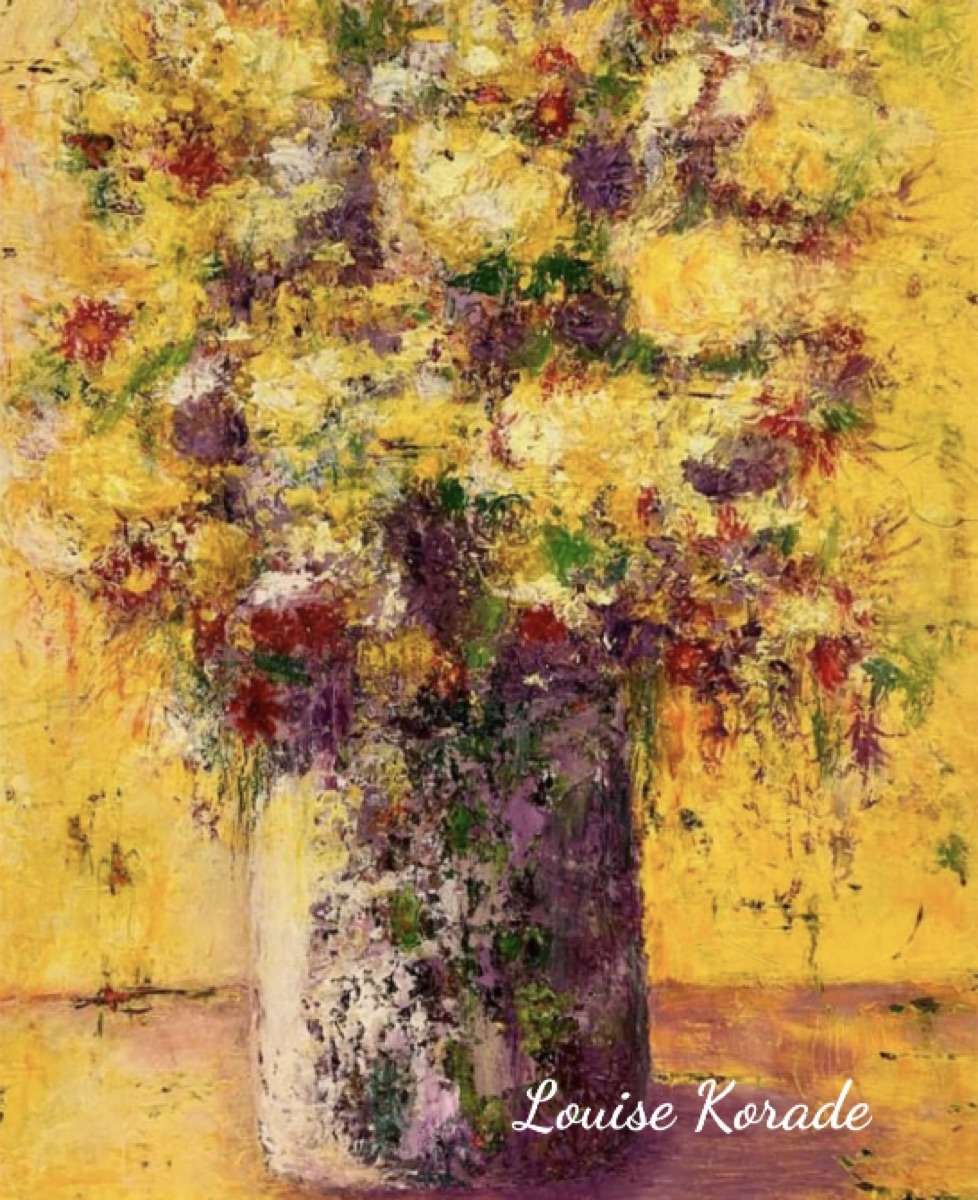
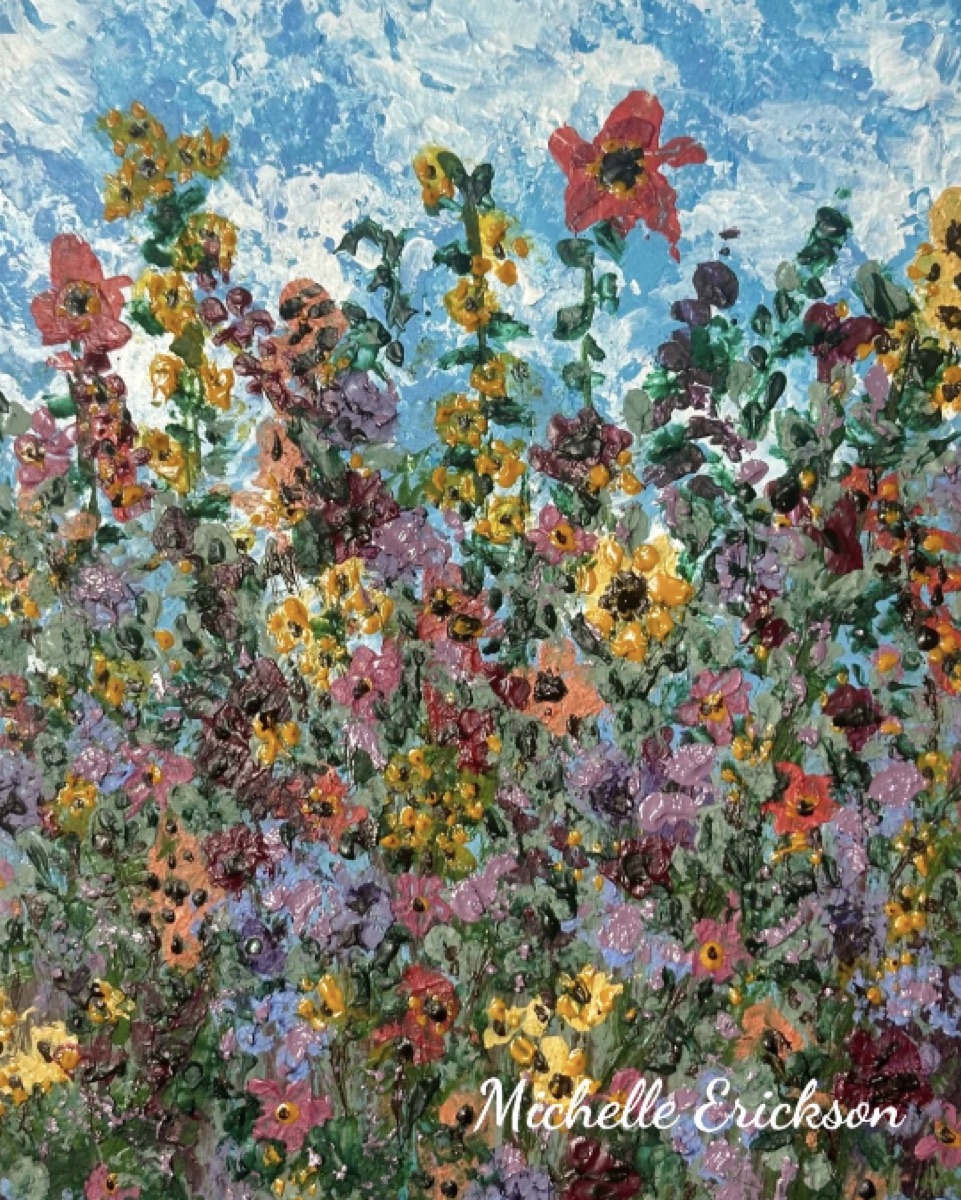
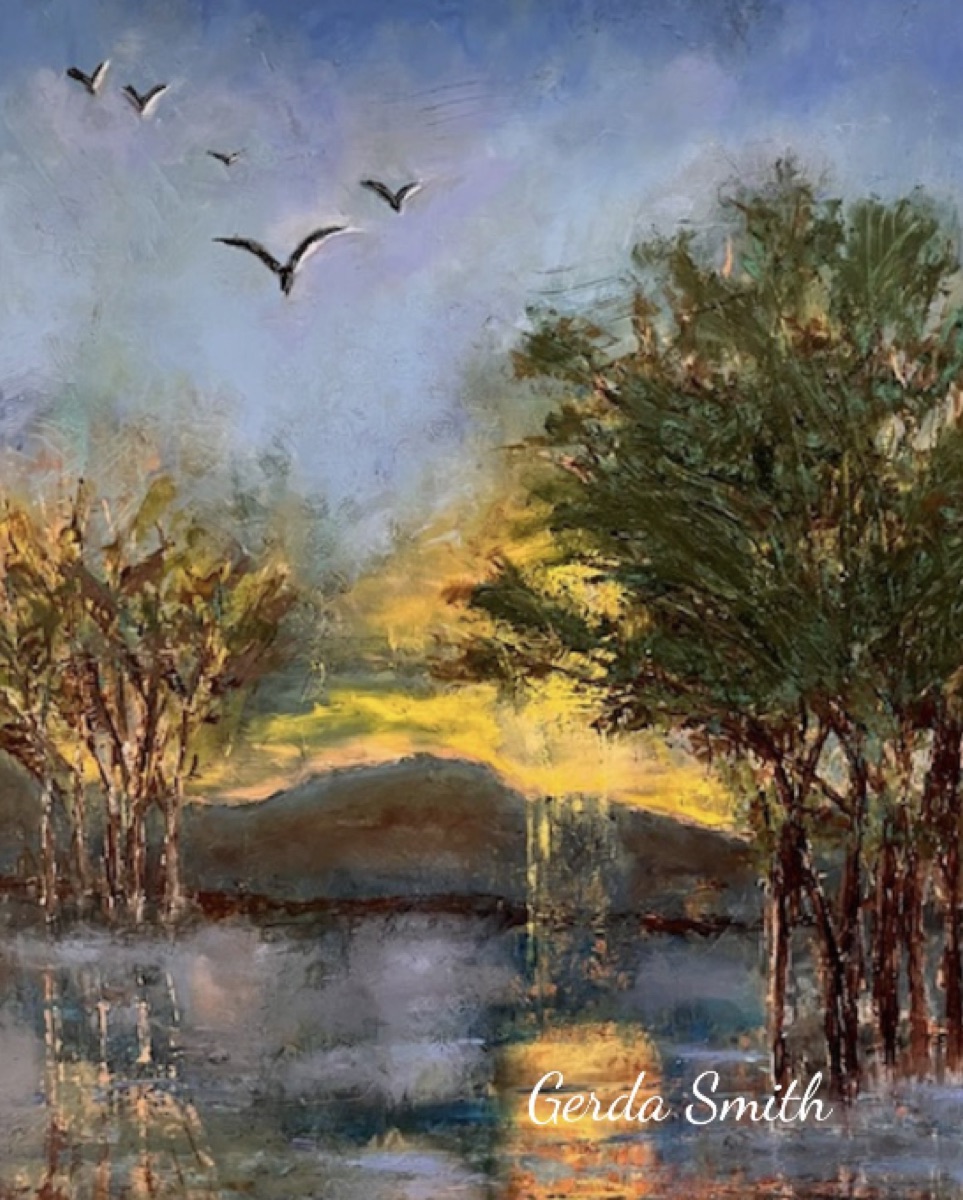
Paintings from the class
Look where other painters have taken it.
Different colours, different marks, and paintings that are their own. I love seeing what happens when you try these ideas.
Louise KoradeMichelle EricksonGerda Smith
“Cold wax is magical! I can't thank you enough for your basics course and encouragement to play.”
Six modules take you from the first experiments into the painting projects. The demonstrations are there to return to as you need them, not a list you have to finish in a weekend.
Take your time with the techniques. Some become clearer when you’ve tried them on your own painting.
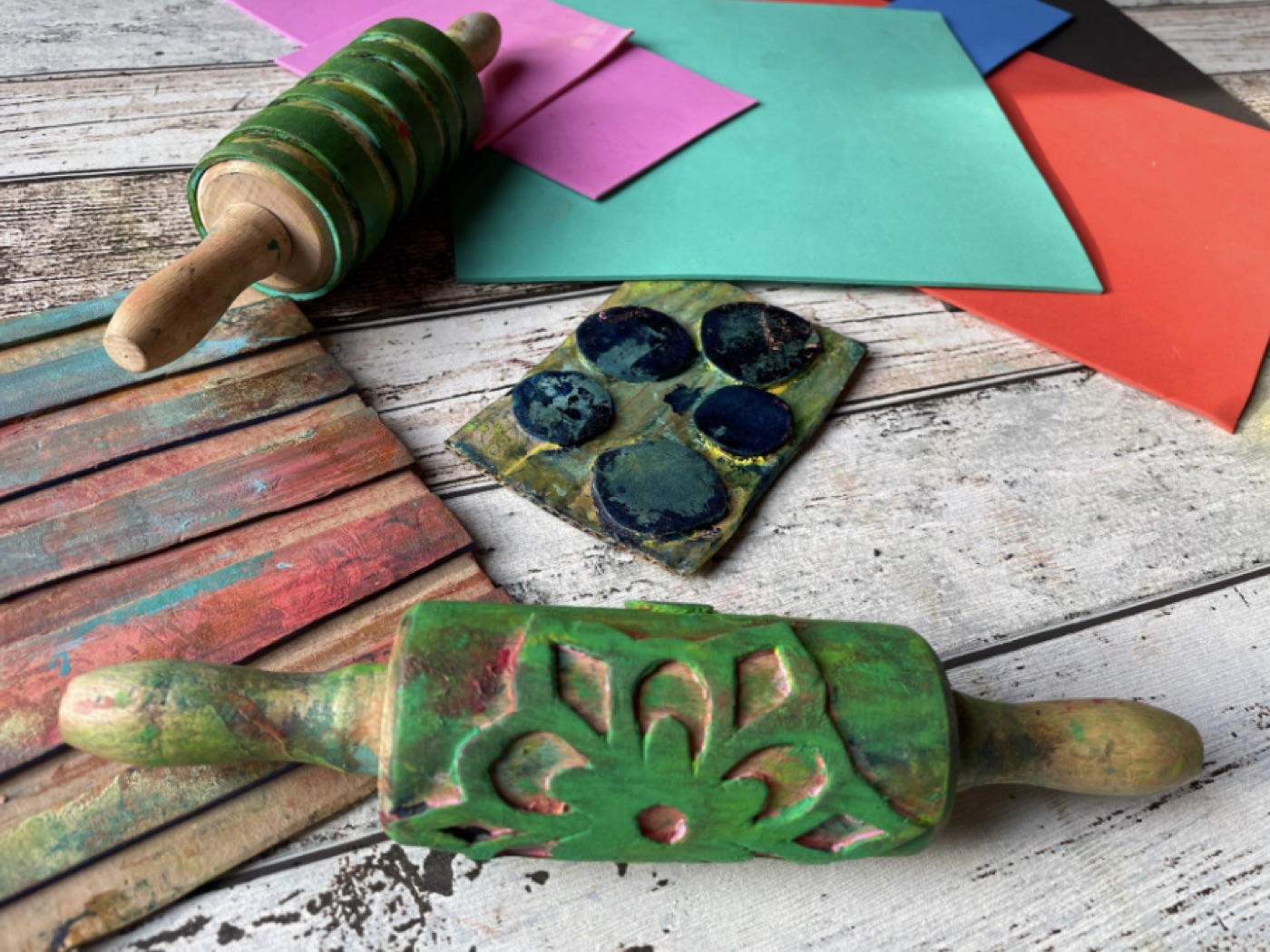
A little extra: make your own texture tools Turn foam shapes and everyday objects into stamps and rollers for your paintings.
01Getting StartedMeet the medium
Get to know cold wax and how it works with oil paint. We look at the first things you need to begin, with time to try the paint and see how it feels on your surface.
02Tools of the TradeScrapers, knives and things to make marks with
Explore palette knives, bowl scrapers, brayers, stencils and painting surfaces. See what different tools can do before deciding which ones you’d like to use.
03Your Technique ToolboxLots of possibilities for your layers
Try spreading and removing paint, transparent veils, marks, transfers and solvent effects. Explore powders, collage and gold leaf, and learn why the drying stage of a layer matters.
04Mini AbstractsFour small paintings to experiment on
Use a small palette to explore colour, marks and composition. We work on four mini abstracts, moving between them as the paintings develop.
05Lush LandscapeColour, depth and atmosphere
Paint a layered landscape with me. See how I work with the surface, bring colours together and develop a sense of distance without painting every little detail.
06Floral FlourishFlowers, texture and gold leaf
Bring the ideas together in an expressive floral painting. We build the background and flowers with layers, texture, collage, glazing and gold leaf.
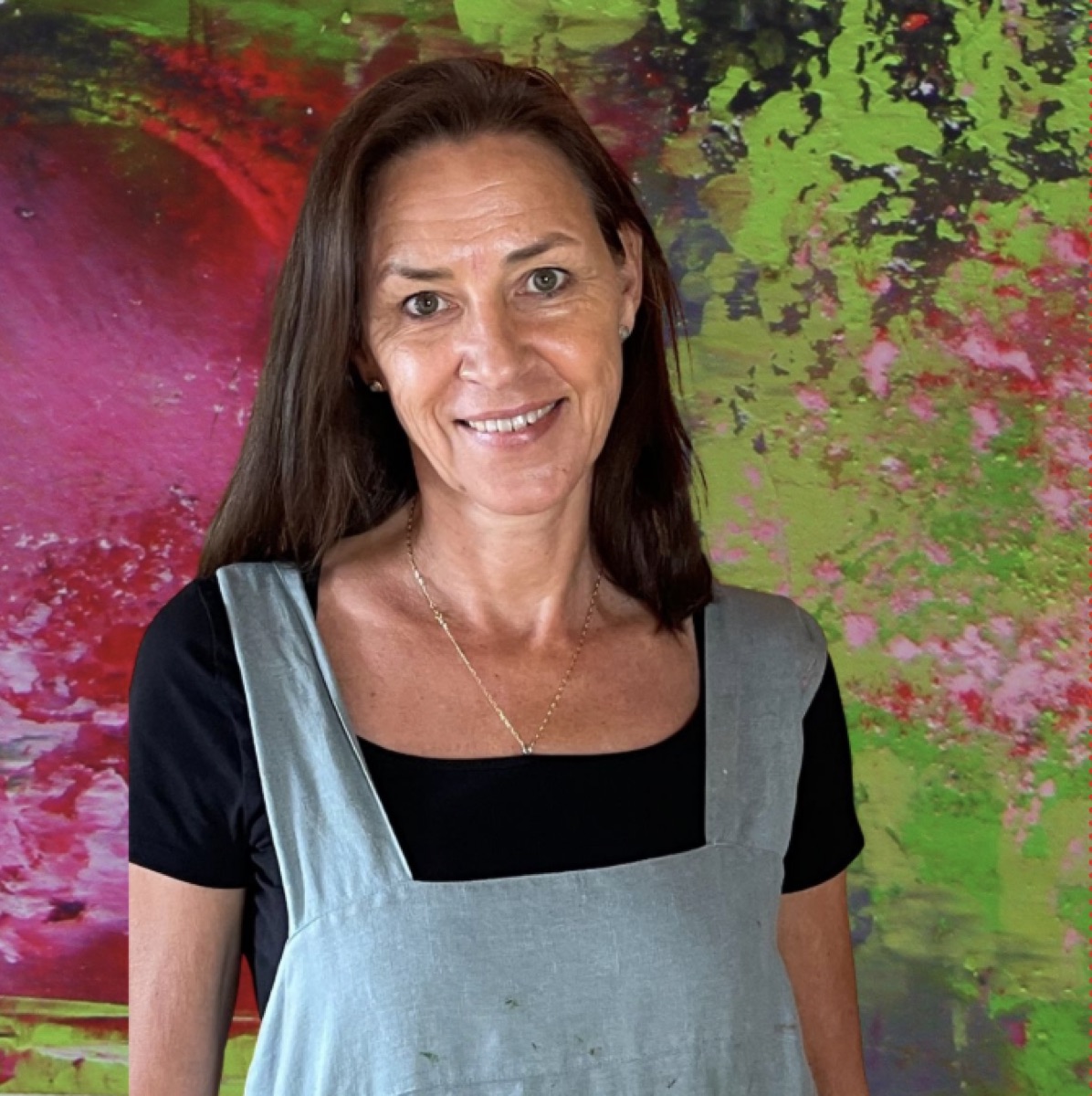
Hello, I’m Marina
I love seeing what the next layer brings.
Cold wax and oils are a big part of my painting life here in the South of France. I love the feel of the paint, the colours showing through and the marks that I hadn’t planned.
In this class, I’ll share the tools and techniques I use in my own studio. You’ll see how I work through a painting, with room for you to make different choices along the way.
You can work at your own pace, and if you have a question, you can email me.
I would love to paint with you. Marina x
Make a little room on your painting table
Shall we try cold wax together?
Start with a few colours and a small surface. I’ll show you how I use the materials, and we’ll take it from there.
“My first experience with coldwax. Thank you Marina for your clear instructions. I can see the potential this medium has!”
Marion H., Cold Wax Basics student
Cold Wax & Oils
The Basics · Full online class
$149One payment. No subscription.
Six modules, from materials to painting projects
Mini abstracts, a landscape and flowers
Bonus: make your own texture tools
Lifetime access, at your own pace
French, Dutch and German lesson text & subtitles
Email Marina when you have a question
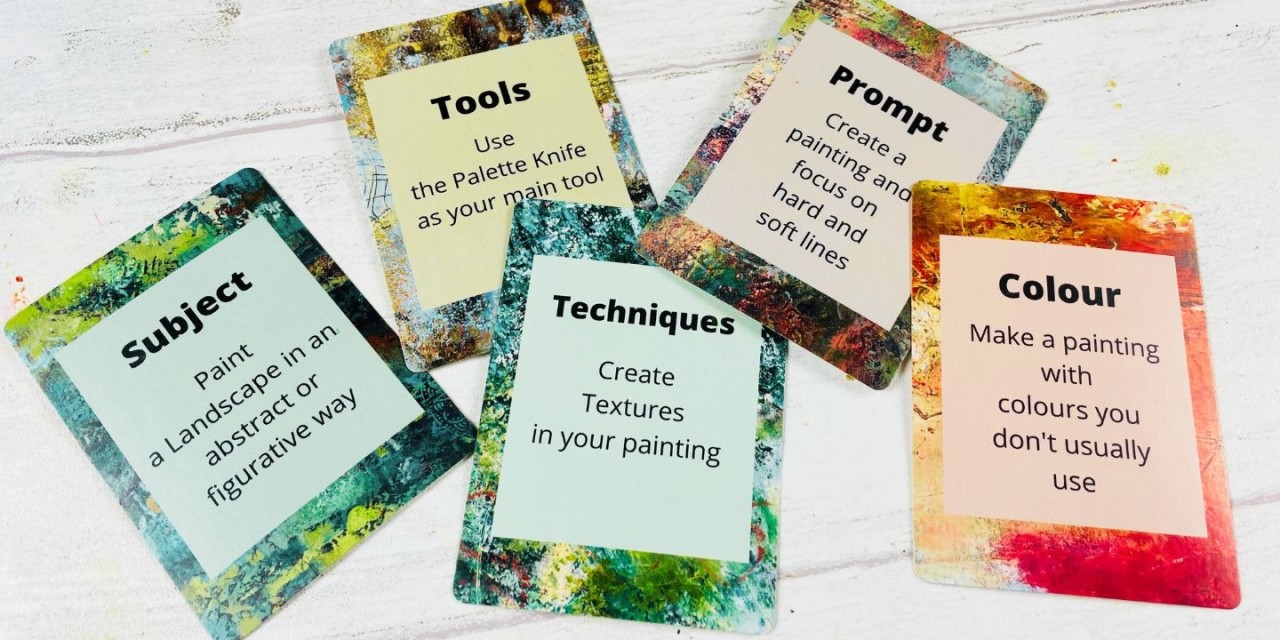
Creative Spark cards from the Texture Lab
The Texture Lab
Would you like to keep painting with me?
An online painting membership for texture lovers.
Cold Wax & Oils: The Basics is also included in Texture Lab Gold and Inner Circle. You can take this class alongside other painting projects, explore the online magazine and share what you’re making with other members.
Buying the class separately gives you lifetime access. Access through Gold or Inner Circle lasts while your paid membership is active.
A few things you might be wondering
Before we get the paints out.
I’ve never used cold wax. Can I start here?
Yes. We begin with the medium, tools and ways of applying the paint before moving into the projects. You can pause, repeat a demonstration and spend time trying it yourself. There is no timetable to keep up with.
Do I need to be good at drawing?
You don’t need to draw a flower or landscape in detail. We begin with small abstract paintings and explore colour, shapes and texture. I’ll show you how I develop the landscape and flowers as we paint.
What exactly is cold wax? Do I need to heat it?
Cold wax is a painting medium that you mix with oil paints and use at room temperature. It is different from encaustic, so no heated wax equipment is needed for this class. We explore how the mixture behaves and how you can use it to build layers.
Will I need to buy lots of supplies?
You’ll need oil paints, cold wax medium, a suitable painting surface and some tools for spreading paint and making marks. The supply guidance is in the Welcome section. You don’t need to buy everything I demonstrate: start with the essentials and colours you have, then add materials as you want to explore them. Check the product instructions and ventilation requirements when setting up your workspace.
Can I use acrylics instead?
The demonstrations in this class use oils and cold wax medium, not acrylic paint. If you prefer acrylics, my Textured Acrylics: The Basics class explores layering and textured painting with acrylic materials. The ideas are related, but the materials and their drying behaviour are different.
How much time should I allow?
This is a full class to explore over time, not a single short project. Watch a little, try something on your painting and come back when you’re ready. Some techniques need a layer to dry first. Drying depends on the materials and thickness, and we look at those stages in the class.
How long do I have access?
Buying the class on its own gives you lifetime access for one payment. There is no subscription or deadline to finish. If you take the class through Texture Lab Gold or Inner Circle, access lasts while your paid membership is active.
Can I watch in French, Dutch or German?
Yes. The class has translated lesson text and video subtitles in French, Dutch and German. My spoken teaching stays in English, and you can choose your subtitle language in the class video player. The short introduction video on this sales page is in English.
 Mini Abstracts