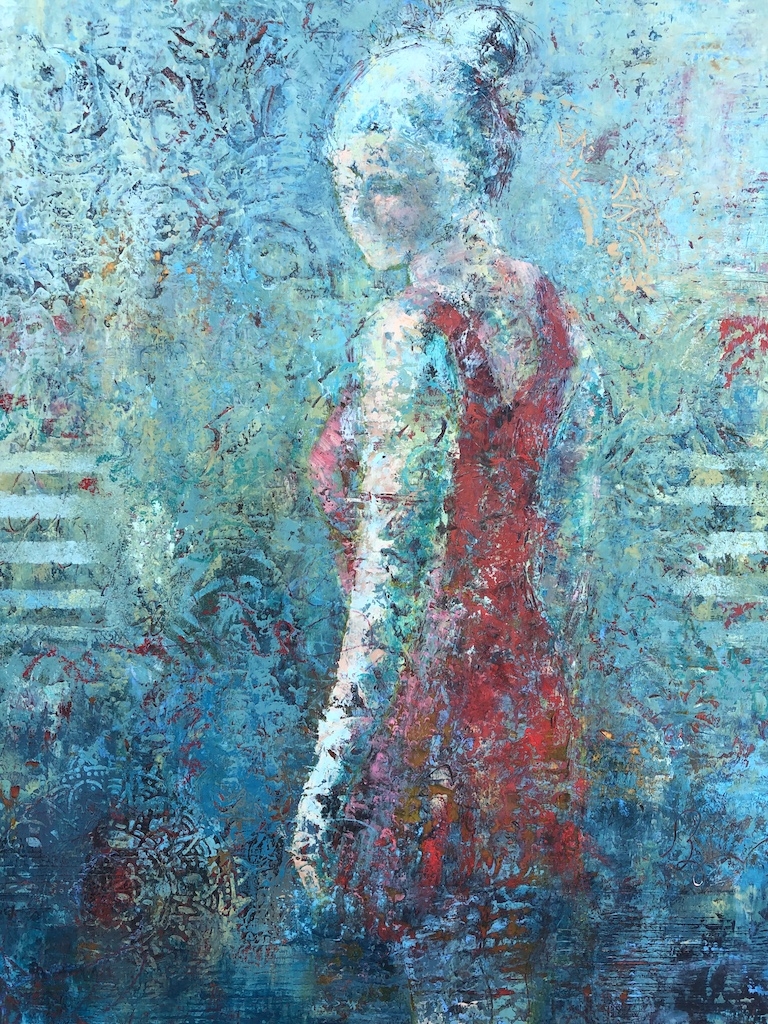
I love it when a figure feels part of the painting, with colours and marks showing through. We’ll build an abstract background, then add a figure without covering up all those lovely layers.
Abstracts + two figure projectsFour modules + a framing bonusAt your own paceEN voice · FR, NL & DE subtitles
A few quick drawings to loosen upNo tiny details needed.
If drawing is the thing holding you back
You don’t have to draw it all freehand.
We’ll look at a few simple proportions and try some loose sketches. A head, a body, the angle of a shoulder. We don’t need all the fingers and folds to recognise a figure.
And you can trace. There’s nothing wrong with that. You’ll also see how I transfer a drawing onto my painted panel, so you don’t have to start again on a background you love.
Then we can spend our time on the part I’m excited to share with you: the colour, texture and layers around and through the figure.
There’s plenty to enjoy before the figure even arrives. We’ll paint on paper and on panel, exploring what happens as we add, cover and reveal the layers.
A little warm-up
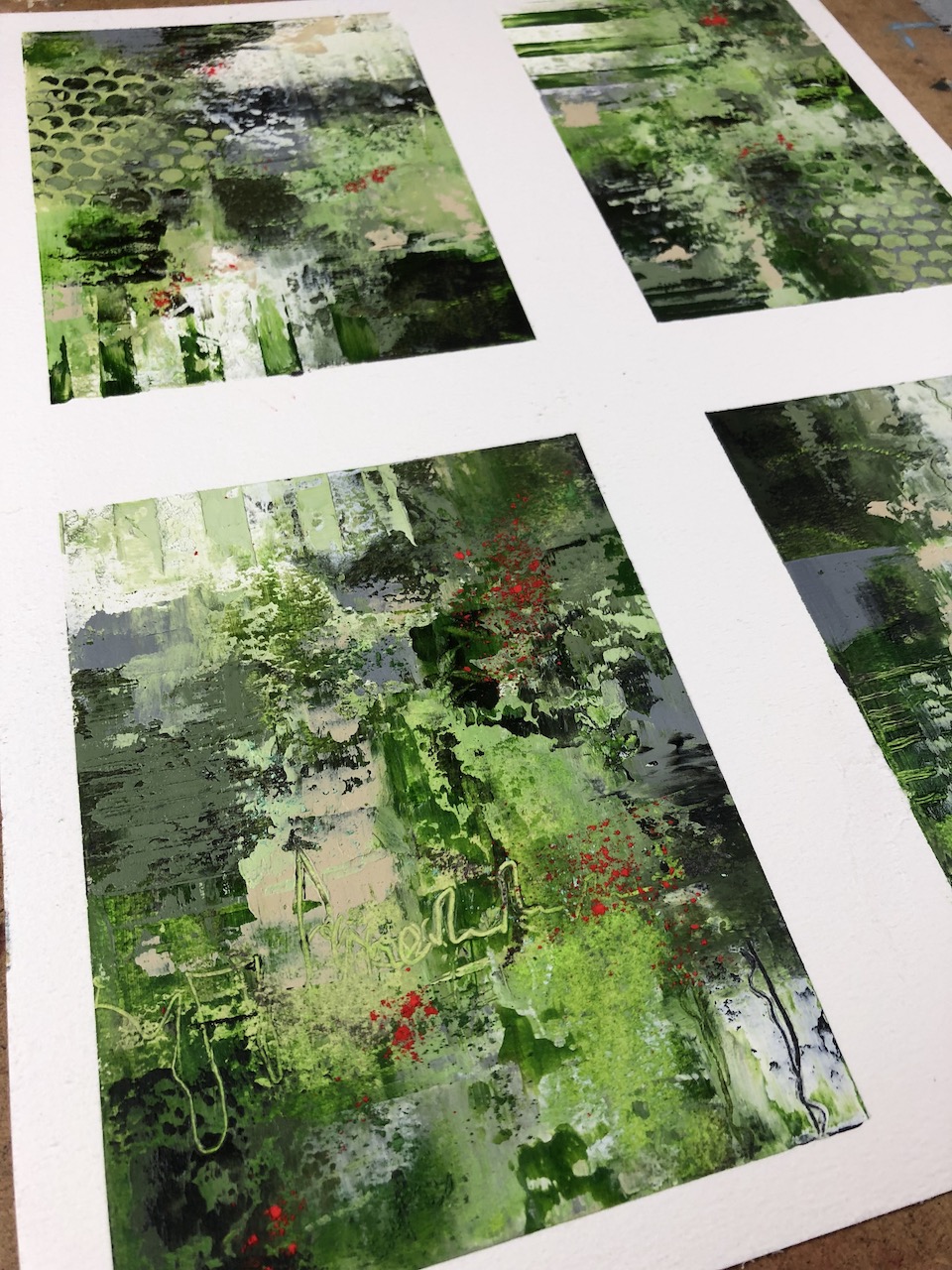
Four small paintings to play with.
One colour, a few tools and four little squares. We’ll mix lights and darks, make marks and try out the paint before thinking about a figure. It’s an exercise you can come back to with different colours whenever you like.
A Textured Girl
Let the background become part of her.
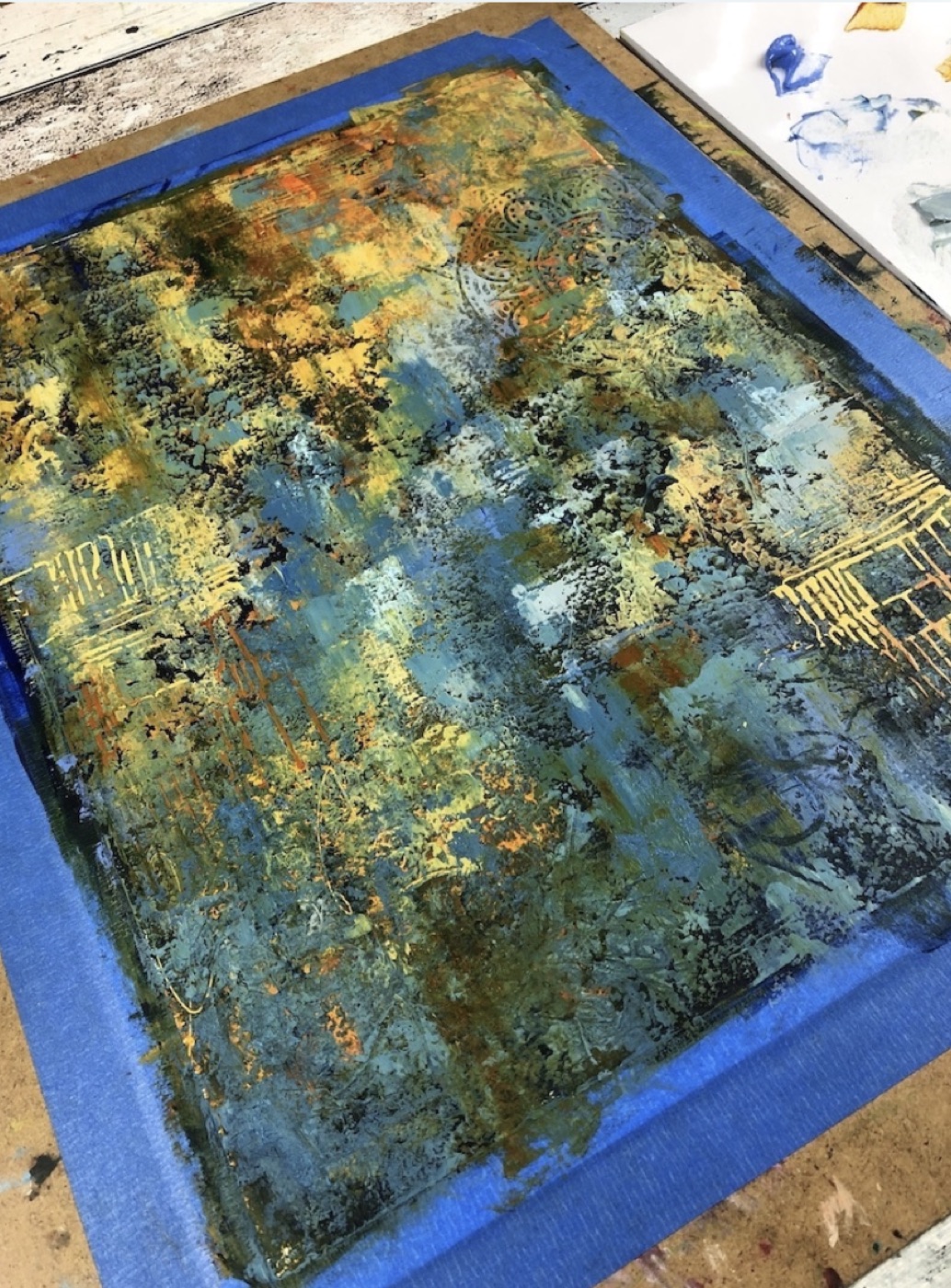
On oil paper, we build a background with colour, scribbles and texture. Then we add the figure, keeping some of those earlier layers visible. I’ll show you how I decide what to paint over and what to leave.
A Layered Lady
Bring it all together on a panel.
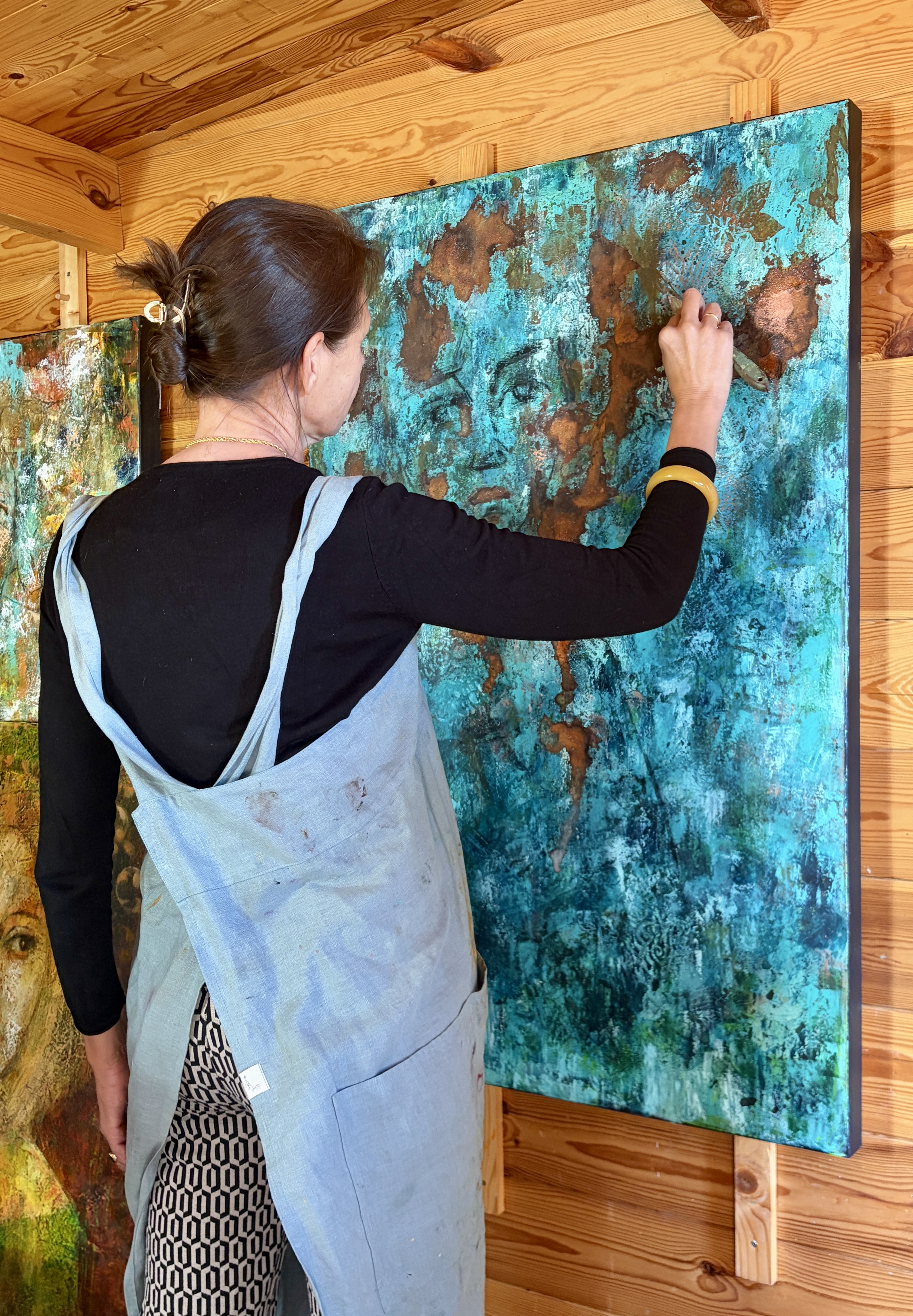
We start with dark and warm layers, then add blues and greens. You’ll see how I transfer a drawing onto the surface and work the figure into the painting, with stencils, pastel marks and colours peeping through.
Use my colours or try your own. I’d love to see what you make.
A little look inside
Come into my studio.
Here’s a short introduction to the class, the paintings and the way we’ll work together.
Paintings from the class
So many ways to paint a figure.
I love how differently these ideas turn out in each person’s hands. Here are a few paintings made by students.
Andrew BowersIsabelle SimianeAnne Arts
“I've taken her online figure class and her teaching style and techniques are well done and free spirited. You won't regret taking one of her online classes.”
After the welcome and supply guidance, four teaching modules take us from drawing and abstract experiments to the two figure projects. Pause, repeat a part or come back after a layer has dried.
The background before the figure
01Figures, proportions & drawingA few guidelines, then some loose sketches
Look at the big shapes of a figure and try simple proportions. We loosen up with quick drawings and different tools, including a skewer and ink. Reference photos and tracing give you ways to begin without having to invent a figure from scratch.
02Four abstract squaresGet to know the tools and your lights and darks
Work on four small paintings at the same time, with one main colour, white, buff and black. Try a scraper, palette knife and mark-making tools. We explore how light and dark areas work together before adding a subject.
03A Textured Girl on paperBuild the layers, then add your figure
Make a colourful, textured background on oil paper. Add marks and further layers, then draw your figure into the painting using a reference. You can trace if you prefer. We leave parts of the background showing through and scrape back where we want to reveal more.
04A Layered Lady on panelWarm and cool layers, a drawing and the finishing marks
Prepare a wooden panel, build the background and mix colours for the upper layers. I’ll show you how I transfer a drawing from paper to the painting. Then we develop the figure, work with the surrounding shapes and decide where to add those last marks.
A little extra: the finishing touch Ideas for framing and displaying your finished paintings.
Hello, I’m Marina
The background is half the fun.
I’m a Dutch artist living in the South of France, and cold wax and oils are a big part of my painting life. I love building an abstract background and then finding a way to make a figure feel at home in it.
In this class you’ll see how I work, from the first marks to the parts I choose to leave alone. We won’t paint every detail, and I don’t expect your painting to look exactly like mine.
Take your time with it, and if you have a question, you can email me.
I would love to paint with you. Marina x
Get your favourite colours ready
Shall we paint a figure together?
We’ll begin with a few small experiments. No need to have the whole painting worked out before you start.
Textured Figures
Cold Wax & Oils · Full online class
$99One payment. No subscription.
Simple proportions, tracing and drawing transfer
Four abstract squares + two figure projects
Four teaching modules + a framing bonus
Lifetime access, at your own pace
French, Dutch and German lesson text & subtitles
Email Marina when you have a question
Creative Spark cards from the Texture Lab
The Texture Lab
Would you like to keep painting with me?
An online painting membership for texture lovers.
This Figures class is also included in Texture Lab Gold and Inner Circle. Paint along with this class, try other projects, open the online magazine and share what you’re making with other members.
Buying the class separately gives you lifetime access. Access through Gold or Inner Circle lasts while your paid membership is active.
A few things you might be wondering
Before we get the paints out.
I don’t think I can draw a figure. Can I still take this class?
Yes. We look at simple proportions and practise seeing the big shapes, rather than every little detail. You can draw freehand, trace a reference or prepare a drawing on paper. I also show you how I transfer a drawing onto the panel, so you can concentrate on the painting if you prefer.
Do I need experience with cold wax?
You don’t need to have painted a figure before. We begin with the supplies, drawing exercises and four small abstracts before the two figure projects. If you’d like a broader introduction to the medium and its many techniques first, Cold Wax & Oils: The Basics is another place to begin.
What materials will I need?
The essentials are oil paints, cold wax medium, a suitable surface and tools for spreading the paint. I use oil paper and a wooden panel for the two projects, with a palette knife and scraper. The class has a supply list, including optional materials such as pastels, stamps and stencils. Start with the colours you have, and follow your products’ instructions and ventilation requirements.
Can I use my own reference and colours?
Of course. You can follow the class references or work from a suitable photo of your own that you have permission to use. My daughter’s photo is shared for use in this class only. You can also choose a different palette; we explore lights and darks so you can think about more than matching my colours.
Is this a realistic figure-drawing class?
No. We use some simple drawing guidelines, but the focus is expressive painting. We’re looking at the figure’s shape, the colours around it and the layers showing through, not detailed anatomy or a photographic likeness.
Could I paint along in acrylics?
The demonstrations use oils and cold wax medium. The ideas about layers, colour and bringing a figure into an abstract background can inspire your acrylic paintings too, but the materials and drying behaviour are different. This isn’t a step-by-step acrylic class.
How much time should I allow?
This is a full class you can explore at your own pace. Watch a little, try it on your painting and return when you’re ready. Layers need time to dry between some stages; the materials, thickness and conditions in your studio affect how long that takes.
How long do I have access?
Buying the class on its own gives you lifetime access for one payment, with no subscription or deadline to finish. The class is also included in Texture Lab Gold and Inner Circle, where access lasts while your paid membership is active.
Are French, Dutch and German available?
Yes. The class has translated lesson text and video subtitles in French, Dutch and German. My spoken teaching stays in English. Choose your subtitle language in the class video player. The short introduction on this page is in English.

 A little warm-up